
San Fernando Neighbors by Block
A block lookup works when each source is given a narrow task. The Assessor map identifies parcel shapes and AINs. The public Assessor search supplies parcel facts but suppresses owner names online. The recorder connects a parcel to title parties through an in-person name and year process. Voter records are regulated and are not an open street browser. City and civic records add public roles or address-specific activity without exposing a household roster.
| Source | What It Shows About a Block | Access |
|---|---|---|
| LA Assessor Map | Adjacent parcel shapes, AINs, and situs addresses | Free map browsing; owner names suppressed online |
| Assessor Property Search | Parcel facts, legal geography, values, and map links | Free address or AIN search; specific-property ownership channel is separate |
| GIS-NET Public | Zoning, tract, parcel, and planning layers | Free; Planning describes coverage as unincorporated county territory |
| RR/CC recorder | Grantors, grantees, document numbers, dates, and legal descriptions | In-person index; copy requests can be remote, mail, or in person |
| Voter records | Individual registration or permitted file information | Identity, purpose, and Elections Code safeguards apply |
| City and civic records | Permits, hearings, public roles, and voluntary public contacts | City counter, CPRA request, or published organization contact |
These sources can describe a block without proving who sleeps in each structure. Owners, title parties, listed subscribers, registered voters, occupants, children, guests, and household members are different categories. A reliable San Fernando block record keeps the category, source date, and jurisdiction visible.
San Fernando Neighbor Parcels
The county map method begins with the target address, not a person's name. Enter the normalized address, zoom until parcel lines and AINs appear, and click the subject parcel. Then click every touching or nearby parcel. Work one side of the block at a time and record cross-street bounds. Corner lots, unit labels, and narrow parcels can otherwise disappear from a casual pan.
The AIN list becomes a set of lawful record keys. Use it to compare parcel facts, request a specific ownership response from the Assessor, search the recorder's in-person index by party and year, or ask the city for an address-specific permit or case index. The map itself supplies geography. It does not supply a live neighbor directory.
GIS-NET Public can add tract, parcel-map, zoning, planning, buffer, identify, measure, report, and export tools, but its unincorporated-county limitation matters. It is useful for county islands and edges, not authoritative incorporated-city zoning. Use San Fernando's own city zoning and land-use map for a city zoning question.
Click San Fernando AIN Records
A reproducible block lookup follows the same parcel-to-record flow every time. The aim is to build a small, dated evidence set, not to scrape every possible name connected to a street.
- Verify the complete address, postal city, and incorporated-city boundary.
- Open the Assessor map, click the subject parcel, and write down its AIN and situs form.
- Click the parcels that touch or sit near the subject parcel, working one street side at a time.
- Use the Assessor's specific-property or district-office channel for lawful owner and mailing fields; the public web display suppresses those names.
- Carry each AIN, legal description, and date into the RR/CC deed, city permit, or civic-record channel.
- Stop at the parcel record, title party, or voluntary public contact unless another source independently answers the question.
When the task expands from an immediate block to a named street, use the San Fernando street directory for the full address-keyed sequence. A neighbor lookup should remain a block method, not become an unbounded street roster.
San Fernando Owner Records Stay Offline
Los Angeles County's Assessor website intentionally suppresses owner names and private mailing addresses in the public online display. That is why a parcel card can show an AIN, situs, legal description, use, values, building data, and transfer events without naming the titled person. “Assessor lookup shows who lives there” would be false for San Fernando.
Ownership can be requested through district offices or a specific-property inquiry using the full address and AIN. A response may supply a current owner name and mailing field through a lawful channel. A mailing difference can suggest an absentee or entity owner, but it does not prove occupancy. A recorded deed shows title parties, not every person at the parcel.
This suppression is a useful myth check for neighbors research. It prevents the public map from being mistaken for a household export while leaving a documented path for property questions. Record the method used, the date, and whether a field came from an online parcel card, an Assessor response, or a recorded instrument.
Note: A parcel map can establish what touches a San Fernando address, but it cannot establish the full household living there.
Voter Rules for San Fernando Neighbors
California's voter workflow is person-specific. Documented fields include first name, last name, date of birth, house number, ZIP Code, and an election when ballot status matters. The individual California VoterStatus check can verify a person's own status. It is not a street browser and ballot participation never reveals a vote choice.
Elections Code section 2194 makes voter affidavit information confidential from routine terminals and limits personal, private, commercial, marketing, harassment, and unauthorized internet-display use. Driver-license, Social Security, and state voter identifiers receive added protection. A permitted county request goes through the LA RR/CC Election Information Section in Norwalk or a signed mail request with requester details and a self-addressed stamped envelope.
County registration certifications and file purchases carry stated fees and qualification rules. A requester's purpose and statutory eligibility matter more than a ZIP or block boundary. Safe at Home participants use confidential voter registration, so a missing name should never be read as proof that no neighbor exists.
San Fernando Civic Records, Not Rosters
Public civic contacts can help a person reconnect with a neighborhood activity without exposing private membership data. San Fernando city material references Neighborhood Watch and Business Watch, including San Fernando Mall Association activity. The city department directory and public commission or council records identify people serving public roles. Those are legitimate public-role lookups, not household directories.
City Records
Online Records Counter searches existing city records by keyword, date, ordinance, resolution, or address. A specific email request is the fallback.
Watch References
Neighborhood Watch and Business Watch references can lead to a public city contact or event. They do not establish participation by a particular household.
Business Networks
The San Fernando Mall Association and Chamber or business networks may publish voluntary business contacts. Do not infer a home address or private membership from a listing.
No official neighborhood-association or HOA membership directory was located in the research. Public officers or contact persons voluntarily published by a group are appropriate; a private member roster should not be inferred or reconstructed.
San Fernando Boundary Records Matter
San Fernando is a 2.37-square-mile incorporated city surrounded by Los Angeles. USPS “San Fernando” is larger than the municipal boundary, so a postal label can point toward Mission Hills, Sylmar, or another Los Angeles community. The official San Fernando history page is the manifest source for the city-history image below.
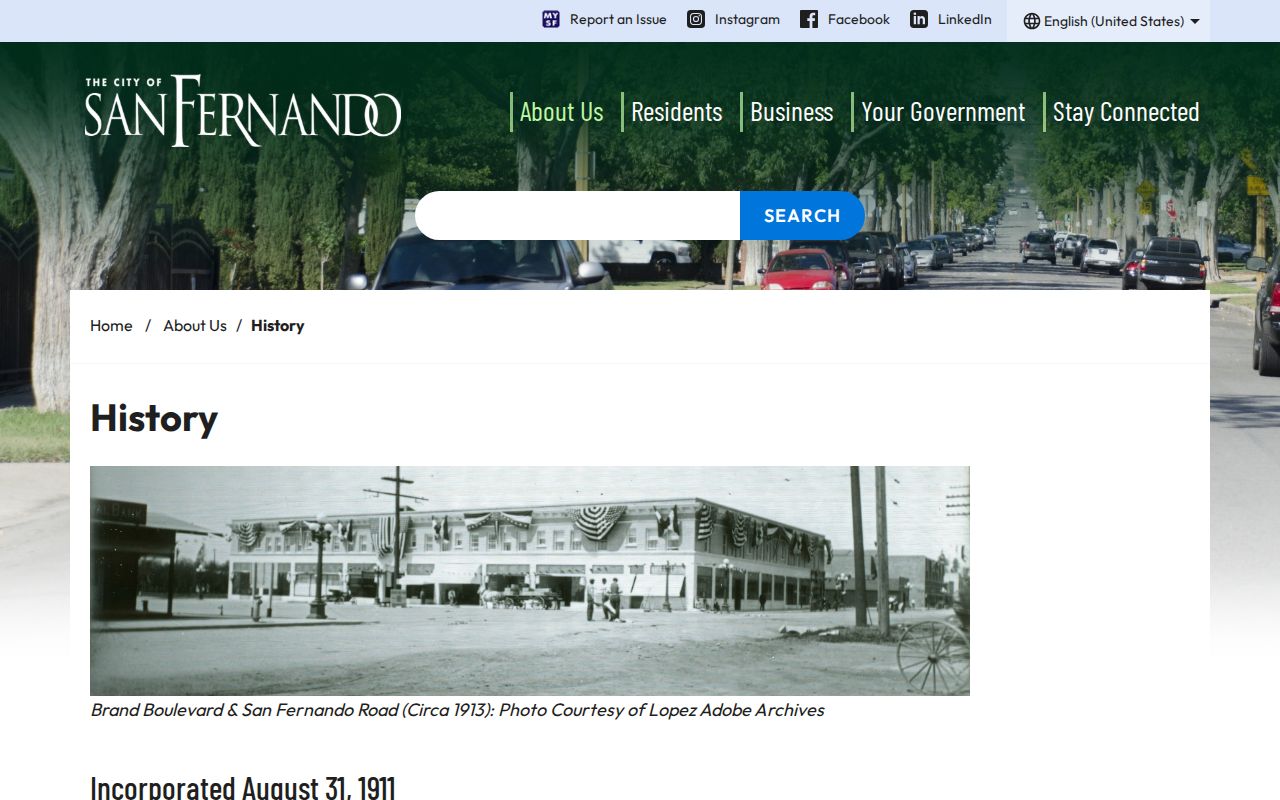
The image anchors the civic history layer, while the parcel and city maps answer the current jurisdiction question. Check the boundary before calling someone a San Fernando neighbor or routing a permit, zoning, or clerk request to the city.
The same distinction matters in historical work. Mission, rancho, rail, Valley, postal, and incorporated-city references may all describe nearby places. Keep the source's jurisdiction field with the address rather than silently normalizing every “San Fernando” label to the city.
San Fernando Neighbors and Safety Registers
California Megan's Law is a separate statutory registry, not a general list of San Fernando neighbors. The official California Megan's Law Website supports name and map or address-area searches for statutorily published registrants. Its result set is limited by law and carries use warnings. A search result must not be treated as a complete criminal history, proof of current identity, or a roster for the surrounding block.
The official registry page is the manifest source for the capture below. It belongs in a safety-awareness workflow only when the legal limits are understood.
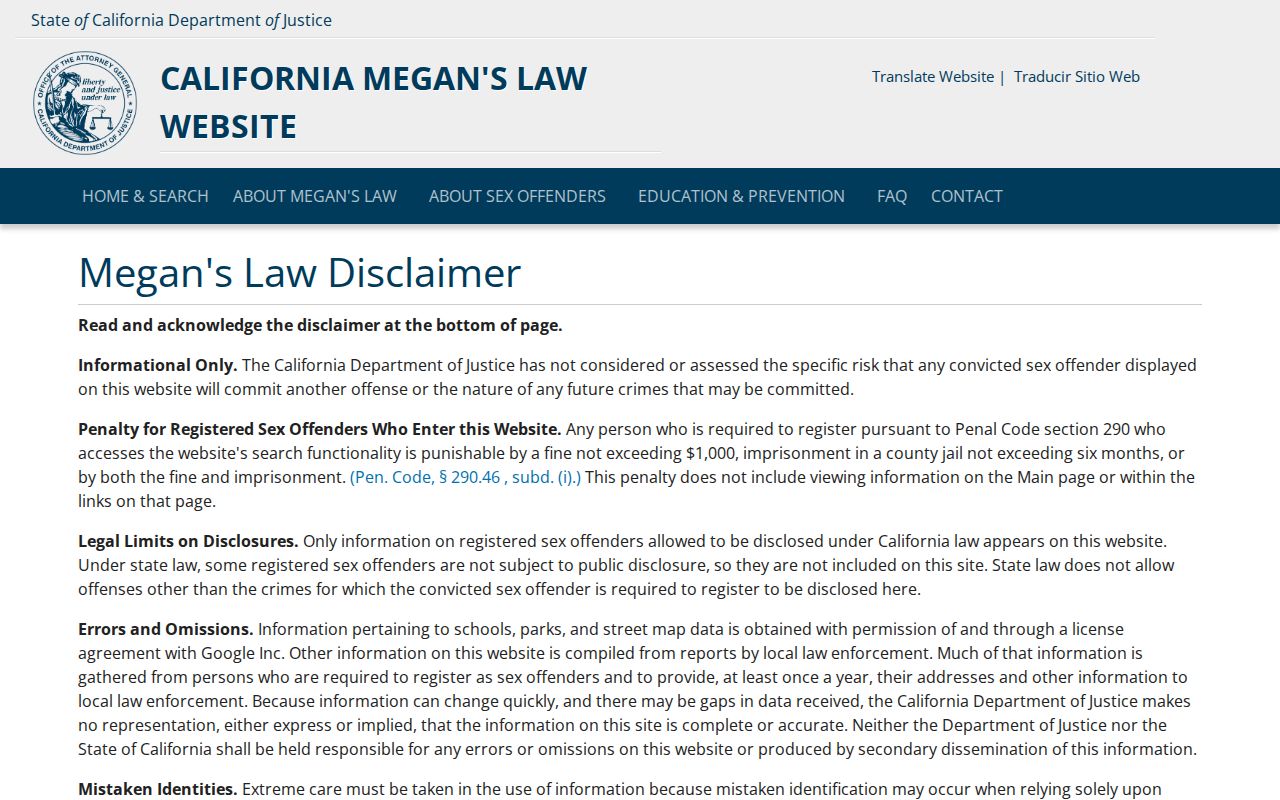
Use the registry's own warning and search rules, verify a public result with the source, and never use a registry or parcel record to threaten, follow, or harass anyone. For an immediate concern, use an official police or emergency channel rather than trying to assemble a private block file.
San Fernando Neighbor Tools Compared
Different record products may look similar because they combine names and addresses, but their evidence quality differs. A comparison helps keep a convenience layer from outranking a custodian record.
| Source type | Useful strength | Limit for San Fernando neighbors |
|---|---|---|
| Assessor map and parcel search | Official parcel geometry, AIN, situs, and assessment fields | Owner names suppressed online; no occupancy or household composition |
| Recorded deed | Title parties, recording date, document number, legal description | In-person name and year index; title does not equal every occupant |
| Voter status or qualified file | Identity and registration information for permitted purposes | Not an open street list; protected fields and use restrictions apply |
| Commercial neighbor-search category | May combine public and purchased data into a convenient interface | Can be stale, merge same-name people, and is not an authoritative record |
Official does not mean complete, and commercial does not mean verified. The best source is the one whose field directly answers the question, with a date and jurisdiction attached.
San Fernando Protected Address Records
A block map cannot reveal every person connected to an address. Renters, children, unregistered adults, guests, and household relationships generally do not appear in a parcel roll. DMV personal data is protected by the federal Driver's Privacy Protection Act. Water-account customer data, delivery data, and protected-program addresses should not be treated as public neighbor fields.
Safe at Home provides a substitute mailing address and confidential voter registration for qualifying participants. It does not erase a legal description, but it does mean that an ordinary lookup may intentionally omit the person. Recorded-document and Assessor details can remain inspectable through lawful channels even when internet display is limited.
Privacy is also a boundary for civic sources. A public officer, event contact, or business listing can be cited for that public role. It cannot be expanded into a private membership list or a household relationship map. When a source does not publish a field, the gap should remain a gap.
Lawful Limits on San Fernando Neighbors
San Fernando neighbors research can support getting to know a block, reconnecting with a civic group, checking a parcel record, or understanding a public safety notice. It cannot authorize surveillance, threats, harassment, or intimidation. California Penal Code section 646.9 addresses stalking, and Civil Code section 1708.7 addresses civil stalking liability. Voter misuse has additional restrictions under Elections Code section 2194.
Lawful use. Neighbor lookups in San Fernando are for personal, lawful research and safety awareness. Never use a record to stalk, harass, threaten, or harm a person.
Keep the source, date, AIN, city jurisdiction, and uncertainty in the research log. Stop before a protected address, private account, or unsupported household inference. That discipline produces a useful block record without pretending it is a list of every San Fernando neighbor.